Water Damage Reconstruction in Georgetown, TX
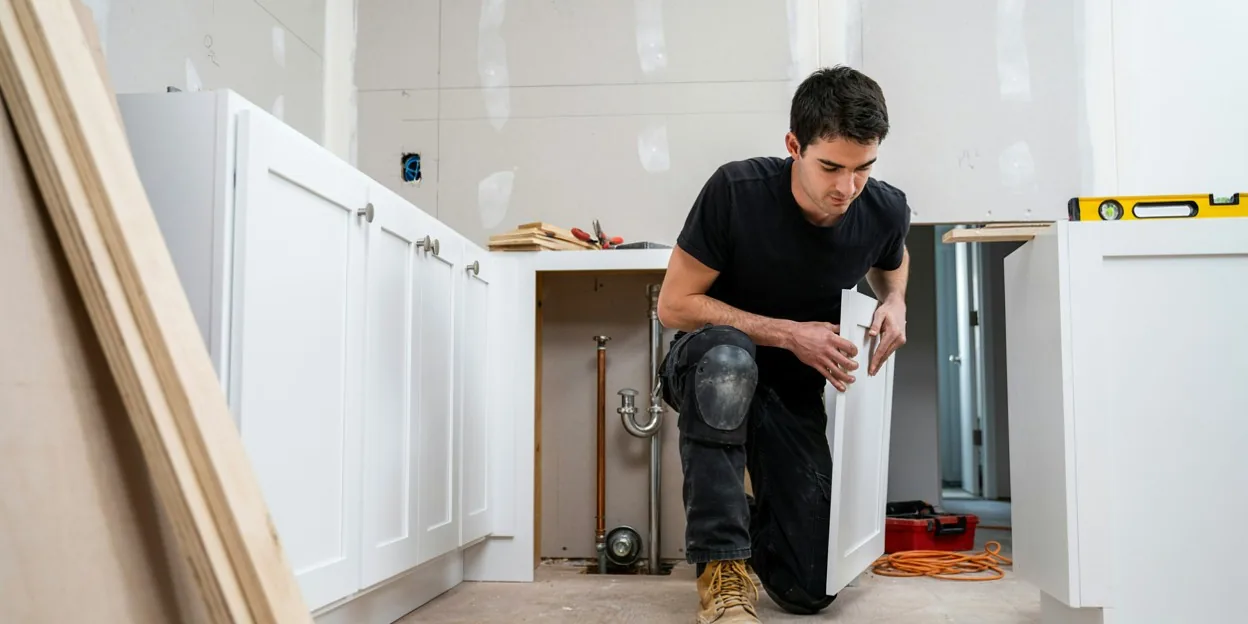
The dehumidifiers went back on the truck last week, and now you live with two feet of open studs along the hallway, a bare slab where the kitchen floor was, and a stack of adjuster paperwork on the counter. This site connects you by phone with an independent local provider who rebuilds what the water took out of Georgetown homes.
Reading the drying log before hanging drywall
The rebuild starts with the mitigation crew's final readings. If the drying provider and the rebuild provider are different companies, the second one asks for the log and checks a few spots with their own meter, because drywall hung over a stud that is still wet is the way a water loss becomes a mold loss. Once the framing reads dry, the work follows the scope: insulation back in, drywall hung and finished, texture matched to the rest of the room, baseboard and casing replaced, paint, and then flooring.
Cabinets and countertops come at the end. If a run of lower cabinets came out, the plumber reconnects the sink after the boxes are set, and in the city that reconnection is a permitted job. The provider walks the finished rooms with you against the written scope before calling it done.
Get the scope in writing and match it to the adjuster's
Before anyone buys drywall, put the mitigation scope, the adjuster's estimate, and the rebuild bid side by side. They should describe the same rooms and the same materials. Photograph the open walls and the bare floors while they are open; that record is the last chance to show what came out. Ask who pulls the permit, who schedules the inspections, and whether the same company handles paint and flooring or brings in a sub.
Texture, trim, and floors that have to match what stayed
The hard part of a rebuild is not the new wall, it is making the new wall disappear into the old one. Georgetown houses from the 1990s and 2000s carry a knockdown or orange-peel texture that a good finisher matches and a bad one does not. Older houses have plaster or smooth-finished drywall and eleven-inch baseboards that a lumberyard does not stock. Flooring is the same problem: a partial replacement in a room where the old boards stayed has to be lace-woven and refinished across the whole floor, or the seam shows forever.
Where the drying saved the floor, the rebuild is smaller. That is the case for hardwood floor drying that worked, and it is why the drying log matters to the rebuild bid. Where the loss was sewage cleanup or flood cleanup, the rebuild is bigger, because nothing porous stayed.
Permits in the city, review in the historic districts, and the county outside both
Inside Georgetown, replacing drywall, plumbing, or wiring that a water loss took out needs a permit from the city, and the inspector wants to see the framing before the drywall closes it. In the Belford, University Avenue, and Olive Street historic districts, and around the courthouse square, any change visible from the street goes through the Historic and Architectural Review Commission and a certificate of appropriateness first. That covers siding, windows, porches, and trim on an 1890s Victorian, and it can add weeks if nobody plans for it. Preservation Georgetown, the nonprofit that works alongside the city on those districts, is a good place to learn what the review expects before the bid is written.
Outside the city limits, in the county pockets around Serenada, Crystal Knoll, and the Andice and Walburg farms, Williamson County handles permits, and the historic review does not apply. In Sun City and the other HOA neighborhoods, the association has rules about contractor hours, dumpsters, and exterior colors, and the rebuild provider should ask for them before the first truck shows up.
Texas does not license general contractors at the state level, so the rebuild provider represents its own credentials. The electrician and the plumber on the job do carry state licenses. A Texas policy that paid for the mitigation typically pays for the rebuild under the same claim, and the adjuster may hold back part of the payment until the work is finished and inspected. Get every change to the scope in writing.
Call when the walls are still open
Have the address ready and say what came out, which rooms are involved, whether the house is in a historic district or an HOA, and whether the adjuster has issued an estimate. Call (512) 399-1654 and we put you through to a local provider serving Georgetown and northern Williamson County.